United Red Army (2007)

Films in the last decade, such as Olivier Assayas’ Carlos and the Green/Spiegel documentary The Weather Underground have tracked elements of the leftist movements of the 1960s and 70s. Another recent entry, United Red Army, follows the development of Japanese Marxist groups in the same period.

Kôji Wakamatsu’s film is primarily fictional, though in its dizzying opening half hour, it regularly mixes in found footage from a period of intense leftist uprisings. And while these scenes aim to bring context, for the uninitiated, the effect is more akin to an oncoming tidal wave than a deliberate accounting of the facts. In this, the film is quite effect at formally capturing the exhilarating spirit of these movements as they spread throughout Japan and the west.

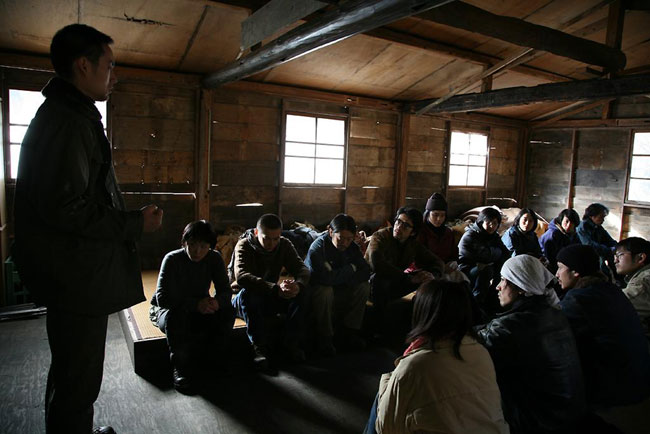
As the film goes on, the settings become more focused, even insular. The film’s fictional dramatizations of events within two groups that join to form the titular URA take place primarily in mountain training centers, where talk about, rather than active, revolution dominates the proceedings. Where the early moments of the film were focused on marches, sit-ins, and even some bombings, as the early fervor wears off, the groups look forward to a long haul of effecting a revolution through planning and training.

Ironically, the film shines in what comes off narratively as a plodding middle act, precisely because it refuses to let up on the rigorous examination of this group slowly turning its attentions inward. Ostensibly the URA trained for revolution, but everything about their training was focused on themselves. As such, they began to lose a real sense of what they were fighting for.

The psychological complexity of this move is extremely well played by Wakamatsu, as the group begins to suffocate under the weight of its own expectations and increasingly delusional understanding of the requirements for revolution. A group looking to implement leftist ideals of fairness and equality, the URA eventually ends up being run as a dictatorship, the powerful personalities filling the void of leadership in the group. And when those people are paranoid hypocrites? Well, you can guess where it goes.

United Red Army effectively traces the psychological currents of an often misunderstood movement. From idealistic kids, the members of the URA—almost to a man—morph into isolated automatons, unable to stand up to the evil in their own midst.

Take Shelter (2011)

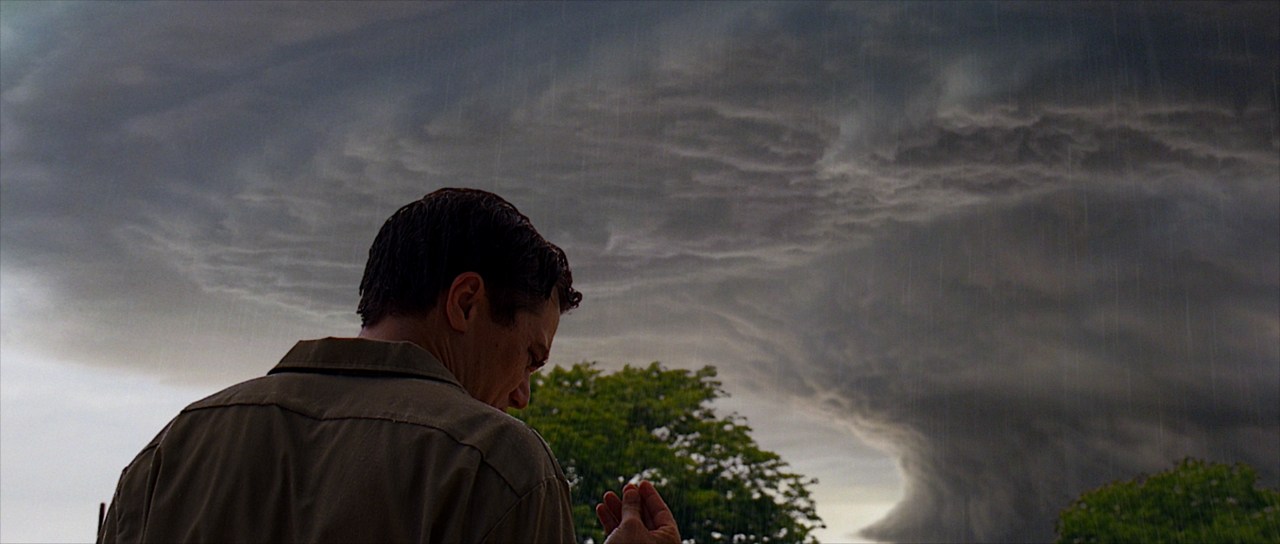
Jeff Nichols’ tense drama Take Shelter begins with a startling, apocalyptic vision. Darkened clouds gather on the horizon, gathering for what looks to be the storm of the century. Curtis (the appropriately disturbed-looking Michael Shannon), stands in his driveway and wipes the first oily drops of rain from his hands. When he wakens from this dream, the first questions that come to mind—Why is the rain oily? and How did the storm get so large?—are, interestingly, not questions the film is interested in. Rather, another question serves to draw the viewer in: Is Curtis seeing a vision of the future or is he losing his grip on reality? Or to put it another way: Is Curtis a prophet or is he mad?

Nichols builds the tension admirably throughout the film, refraining from overwriting the piece and instead letting the stillness and the experiences themselves set the tone and advance the straightforward plot. Curtis has a series of visions through the film, and as each gets progressively more intense, he seems to draw nearer either to enlightenment or utter breakdown. The tension over this question is fascinating, and Nichols raises the stakes when Curtis begins to build out the storm shelter in his backyard. Now as concrete resources and time begin to drain the family’s resources, the strain is unmistakable. Can the people Curtis lives with and cares for the most really stand by and watch him sink the life of his family on what looks to them a whim.

As the film carefully builds this dramatic core, we come to see that the question of Curtis’ mental state informs another issue that stands at the heart of the film. Essentially, Take Shelter is a character-driven piece, looking closely at the ties that bind a family together through the most trying times. And whether the trying time is a coming storm or the onset of schizophrenia or some other mental disease, the film is more interested in the way the family responds to the trials that beset them than it is in ferreting out the source or meaning of the visions.

The film builds to a beautiful climax as the family is forced to wait out a real life mid-western storm in the newly built out shelter. The imagery in the scene is laced with the hopeful notion of life after death. And if the film had ended on this note, it likely would have been a favorite of the year. Instead, it continues, moving to a Shyamalan-like finale that breaks the complex tension Nichols had worked so hard to build. Many have responded positively to that final sequence, but for me the film ends on a frustrating note—what was so close to greatness falters in its final moments.

Of Gods and Men (2011)

Of Gods and Men, Xavier Beauvois’ stirring portrait of monks under the threat of death, offers in clear terms a Christian commitment made tangible. Here we have a group of men so focused on their mission to the people of this region that they allow nothing to stand in the way of their fulfilling the task to which God has called them.

For these men of God, the life of faith is rooted in the concrete deeds of everyday life: a quiet moment in prayer and a song of praise, yes, but also more “earthy” tasks as well, such as keeping a garden, finding shoes for those in need, attending a dedication ceremony for a Muslim child in the community, or a gentle kiss on the injured forehead of a child. For a profession so often thought to be disconnected from society, this small group of men seems more grounded than most people today supposedly “living the dream” in a free society full of opportunity and choice.

And maybe that’s it. These men embody true freedom, a freedom that is felt deeply, a freedom that informs every aspect of their lives. These men are free to live lives in pursuit of the good. Released from the selfish pursuits of life ancient and modern, these monks live not for themselves, but for the other. And in doing so, they exude a quality refreshing and rare in our world: contentment. This small group of God’s servants is content with their lot in life. Certainly, much of the drama surrounds outside circumstances that disrupt that contentment, but a great portion of their victory in the film comes in finding it once again.

The final scenes of the film—which I will not give away here—reaffirm this equanimity. As the reality of their contentment in God settles in each of them, their eyes are opened to the beauties all around them—the joys of community, of brotherhood, of service, and of beauty. These men, in the midst of a war-torn country, live freely and peacefully, just as their master did.

Top Films of 2011

With the Oscars signifying the end of the awards season, I’m taking the opportunity to write up my favorite films from 2011. The year has seen the release of a number of remarkable films, noted by the fact that I have had no troubles whatsoever filling out a top ten. Still, with many yet left to see, the following represent my favorites at the moment:

10. Pearl Jam Twenty: A highly personal pick to be sure, but one for which I feel great enthusiasm. Experienced director and unabashed fan Cameron Crowe offers up a history of the band laced with live performances, found footage, and interviews. The film’s opening sequence detailing the tragic end of Andy Wood brings heartfelt context to the band’s sometimes criticized earnestness. This is, admittedly, a documentary with little illumination of the darkest corners of Pearl Jam’s history. But the heart, the peace, and the connectedness of the band offer an intriguing counterpoint to their music.

9. Bill Cunningham New York: Bill Cunningham, a fashion photographer for the New York Times, is an inspiring individual. His simple joy for life, his consistent kindness to those he meets, his unending interest in others, and his absolute embrace of beauty wherever he finds it make him one of the rarest of people: a genuine human being. And when the interviewer asks Bill about his regular church attendance? A beautiful moment that simply has to be seen. I wrote more extensively about the film here.

8. Meek’s Cutoff: Reichardt’s humanist vision for America—or really, the world—set amid a 19th century Oregon wagon train makes excellent use of its well-rounded characters and compelling, real-world story. While Reichardt focuses on the simple, everyday lives of the settlers, the film slowly evolves into something much more complex and layered, a horrific vision of a people without direction and their mechanisms for trust badly in need of repair. And as Reichardt obviously allows her camera to favor the female characters in this male dominated world, the film stands apart as a unique testament to the ills and sufferings of a world badly in need of vision. I wrote more extensively about the film here.

7. A Separation: A complex, psychological portrait of not just a couple, but a family, a community, and dare I say, an entire society. What begins as a simple disjunction between a married couple continues to grow and manifest itself in ever larger networks of people, involving children, neighbors, employees, community officials, and even the justice system. The acting is exceptional, none more so than the young lady playing the daughter, while the opening and closing shots express at once the beauty and the tragedy of life in Iran.

6. Nostalgia for the Light: An extraordinary essay film less interested in facts and more interested in ideas, atmosphere, and the experience of life. The film deals in a central paradox: How can a place be at once so well-suited for examining the past (in the heavens and on earth), and yet be located in a country unwilling to deal with its own more recent, and tragic, past. Guzman’s photography is exquisite. As one shot blends into the next through creative editing, the film’s underlying humanism stands out all the more. I wrote more extensively about the film here.

5. Of Gods and Men: Love endures. This is a film about a group of men on a mission to love people as best they can, to be neighborly, to give of themselves however they can for the betterment of others. This is a physical and social task, but these men reveal that it is also a spiritual task, one deeply connected with who human beings are and ought to be. The quiet rhythms of the film mimic those same rhythms of monastery life, including sequences of profound goodness & beauty and a Christian ethic made tangible.

4. Tuesday, After Christmas: Muntean’s achingly restrained film illustrates the beauty of marriage by helping the audience to feel real loss when a marriage fails. Using lengthy shots filled with subtext, the film builds tension as the philandering husband nears, and eventually makes, his fateful decision. The key scene is an 11+ minute shot chronicling the aftermath of his choice, along with a wonderfully complex, expertly-acted, and heartbreaking final sequence. I wrote more extensively about the film here.

3. The Tree of Life: More ambitious than Malick’s other features, The Tree of Life brings a cosmic perspective to profound tragedy through the lens of a struggling man’s memories. The first hour of the film, up through and including the creation imagery, succeeds beautifully. As the film refocuses on the family for the final hour plus, it becomes more diffuse as the boy’s relationship with his family fractures. The search for peace, meaning, and beauty comes only in a proper rendering of the past–our own and that of the world.

2. Poetry: A beautifully shot and rendered film, Poetry encapsulates empathy for the other, the joy and the pain involved in truly seeing, and the continued–and maybe even increased–necessity for poetry in the modern world. Yun Jeong-hee’s performance is touching, nuanced, inspiring, and devastating. The film slowly builds to a narrative and emotional crescendo that prompts reflection long after the film ends.

1. Certified Copy: A magnificent achievement from Kiarostami both in writing and direction, as well as a stand out performance from Binoche, who is more compelling than ever. The camera’s gaze slowly humanizes these people, as they grow at once both more concrete and more cryptic. Each successive moment reveals and conceals. As the film drives toward its enigmatic conclusion, the film’s themes become ever clearer: the relationship between truth and fiction, the vulnerability associated with an openness to the other, and the mystery of matrimony.

The Best of the Rest

  • All Watched Over by Machines of Loving Grace (dir. Adam Curtis): A dizzying document of the way our understanding of machines and technology is changing our conception of humanity.
  • Buck (dir. Cindy Meehl): The film documents the life of a serene horse whisperer, a man who knows tragedy and has come out better on the other side of it.
  • In a Better World (dir. Susanne Bier): Bier has a gift for drawing out and dialing up tension in quiet and unobtrusive ways, which she does beautifully here in a film which divides the setting between Europe and Africa to compare and contrast approaches to vengeance.
  • Le Quattro Volte (dir. Michelangelo Frammartino): A series of four movements following the life of a shepherd, a goat, a tree, and charcoal, the film immerses the viewer in creation. Even without the aid of words, Frammartino provides a strong sense of connection to his subject matter.
  • Midnight in Paris (dir. Woody Allen): The scenes set in the 1920s were full of energy, life, and well-rounded characters. If Woody had done the same with the contemporary scenes, this would have easily made the first ten.
  • Mysteries of Lisbon (dir. Raoul Ruiz): Ruiz captures light in ways rarely seen in the cinema, adding a layer of beauty to this exquisitely costumed, sublimely written, visual feast for the senses. The priest stands as one of the most quietly compelling creations in recent years. The story, though it spreads out over wide swaths of time and geography, never lets up, while the constantly shifting perspectives invite us to explore the potential and the limits of narrative.

Harmless Entertainments: A Better Life; Cars 2; Page One: Inside the New York Times; Sherlock Holmes: A Game of Shadows; The Way Back

Frustrating: Contagion; Take Shelter

Still to See: The Arbor; Aurora; Being Elmo; Boxing Gym; Brighton Rock; Conan O’Brien Can’t Stop; House of Tolerance; Hugo; The Ides of March; Into the Abyss; Margaret; Martha Marcy May Marlene; Moneyball; Mother; My Joy; Norwegian Wood; Our Beloved Month of August; The Swell Season; Tabloid; Tinker, Tailor, Soldier, Spy; The Trip; Tyranosaur; Uncle Boonmee; United Red Army; The Way; Win Win

Six Outstanding Discoveries from Years Past:

  • Lucky Life (dir. Lee Isaac Chung): Taking its inspiration from the poetry of Gerald Stern, the film offers a sensitivity to the way pain and memory ripple through life. Chung edits the film intuitively, making connections that inspire reflection rather than determine meaning. And what a final shot.
  • Secret Sunshine (dir. Lee Chang-dong): A remarkable film about a woman’s journey from isolation and abstraction to a more connected and human existence. Its nuanced portrait of Evangelical Christians brings something unique to cinema. I wrote more extensively about the film here.
  • Night of the Demon (dir. Jacques Tourneur): Terrific horror that focuses on the subtle psychological transformation taking place in the lead character.
  • Los Angeles Plays Itself (dir. Thom Anderson): An engaging and engrossing essay film on the presentation and identity of Los Angeles.
  • Happy Here and Now (dir. Michael Almereyda): An atmospheric film from New Orleans that explores the loss of identity we experience as technology encroaches, even to the point of mediating our relationships for us.
  • Another Year (dir. Mike Leigh): Magnificent film from Leigh, attempting and succeeding at one of the most difficult tasks for a filmmaker and storyteller: presenting a believable and compelling vision of goodness—in this case, through marriage.
Meek’s Cutoff (2010)

At the opening of Kelly Reichardt’s claustrophobic period drama, Meek’s Cutoff, a group of seven settlers and their guide ford an Oregon river through chest-high water. The cerulean watercourse cuts a strange and striking figure against the otherwise stark desert landscape. The deliberate movements of the settlers, crossing with what little they can carry only to bring the lightened wagons over separately, offers a sense of the often painfully slow travels of early westward emigrants. They also point forward to Reichardt’s languid pacing, much of a piece with her earlier films Old Joy and Wendy and Lucy. The crossing sequence plays without dialogue, concluding with one of the men carving a word into a nearby piece of driftwood—LOST.

The guide, Stephen Meek (Bruce Greenwood), had promised to show the settlers a shortcut west from Boise to the Willamette Valley. However, as the trip lingered on day after day, the settlers began to wonder whether Mr. Meek hadn’t promised more than he could deliver. Reichardt’s film chronicles the group’s growing mistrust of their leader, as well as the effects that the lack of water leaves on the party. When the group captures an Indian, the man becomes at once a lightning rod for fear and a pillar of hope.

The film’s interests are many. Reichardt’s decision to film in the aspect ratio of yesteryear—1.85.1—rather than in the typical widescreen format, gives the film a tight, enclosed feel. The settlers, though they can look for miles in any direction, have been boxed in by their circumstances. Reichardt also focuses her camera on the people and their actions, refraining from the epic landscape shots that litter Westerns. This choice suits her purpose well. It offers the opportunity to highlight the materiality of the world around these characters. These are people of the land. They scrub dishes, plane new axles, and walk endless miles on the unforgiving ground.

Reichardt’s film also subverts our expectations with its emphasis on the women of the party—especially Mrs. Tetherow (Michelle Williams). The camera often finds its way to the women. They walk alongside the wagons. They rise first in the morning to prepare the fire. They do all the cooking and cleaning. They gather firewood and wash clothes. And yet, when the time comes for the group to have an important conversation, the men leave the women out of it. It’s especially in these moments, as Reichardt’s camera lingers on women without a say in their destiny, that the film engenders our compassion for their situation.

No doubt many will read the film as a parable on today’s America. While this is by no means required, its modernist score certainly gives a hint in this direction. However, this kind of reading is only possible because the film remains firmly rooted in the materiality of its milieu. In this, Meek’s Cutoff takes on a universal tone. And as the group struggles with what to do and who to trust, Reichardt concludes the film on a narratively ambiguous shot. For those who demand narrative closure, this will no doubt frustrate their expectations. But the final shot’s brilliance is thematic rather than narrative, a humanist statement on our fundamental need for one another if we are to have any hope in this world.

Bill Cunningham New York (2010)

Most films I love as films. Occasionally though, I love a film purely because of its subject. Bill Cunningham New York is just such a case. Before seeing this, Bill Cunningham the man was a stranger to me. I knew nothing about him. I didn’t know what he did, where he lived, or who his friends were. Having seen the film, I now can say I know something of Bill Cunningham. And it’s clear to me that to know Bill Cunningham is to love Bill Cunningham. Let me introduce him to you.

Bill Cunningham takes pictures. A New York fixture for more than fifty years, Cunningham now has a couple of regular columns in the New York Times. His “On the Street” column compiles photos that he has taken of regular people on the street. He has an eye for bold colors, flashy accessories, and trends in the making. In his “Evening Hours” column, he turns his lens on high society, attending the parties where he expects to find the most interestingly-dressed people.

Bill Cunningham sees the world around him. Cunningham has said he’s not a great photographer. And while that might be the case in some kind of overly technical sense, it has little to do with the opinions of the women he has photographed over and over again, nor with his astounding influence in the fashion world. At the end of the day, Cunningham has the fundamental element that every real photographer needs: the ability to see beyond himself and immerse himself in the world around him.

Bill Cunningham accepts people for who they are. The variety of people Bill photographs is one way this becomes clear. His photographs always place people in a good light. One fashionista interviewed in the film says that Bill has never printed a bad or mean-spirited photograph of anyone. In more than fifty years! Cunningham is driven by an underlying commitment to kindness and an acceptance of others no matter who they might be. Bill has no interest in honoring some kind of stratified society, easily eschewing parties hosted by kings and queens for a more “humble” gathering taking place at the same time. Cunningham finds interesting people wherever he goes, and it just so happens that they are often the lesser-knowns of our world.

Finally, Bill Cunningham seeks beauty. And he finds it. He finds beauty in the fashions of people on the street. He finds beauty at New York society parties night after night. He finds beauty on the fashion runways of New York and Paris. He finds beauty in his interactions with people of all kinds. And because he finds beauty, Bill Cunningham radiates beauty. He looks, to this eye, like a genuine human being, someone so fully engaged in life that his natural enthusiasm and joy cannot help to uplift the people around him.

I didn’t know Bill Cunningham before seeing this film. I am glad I know him now.

Nostalgia for the Light (2010)

Patricio Guzmán’s beautiful, layered, and thought-provoking essay film, Nostalgia for the Light, seeks to explore the past—distant and recent—as seen in the stark, Atacama desert of Chile. The film’s images are never less than stunning, whether the camera shows us visions of celestial or physical bodies. The Atacama is home to the largest telescopes in Chile, its arid climate perfect for taking in galaxies and stars. At the same time, the aridity of the desert means those who die there are uniquely preserved, whether 1,000 years old or thirty.

On top of the stunning visuals, Guzmán mixes personal reflections through his own narration with comments from astronomers, geologists, and those who lost loved ones during the brutal reign of General Pinochet. It is this final group, and the event itself, which connects the film to the contemporary mind. In a country where astronomy—which looks at the distant past—is so popular, Guzmán laments the unwillingness of his countrymen to reflect on the more recent past—whether the brutality toward Chilean Indians in the late 19th century or the mass assassinations of the Pinochet regime in the 1970s.

Guzmán’s combination of astronomy with geology proves noteworthy, uniting heaven and earth in a search for identity, origins, and understanding. Astronomy provides a sense of transcendence to the search for understanding of the recent Chilean past, while geology provides a sense of rootedness to the larger questions the film poses. When the film turns its attention to two women who had family members killed by the Pinochet regime—women who have spent or continue to spend some time in the desert systematically digging for their loved ones—the film takes on an intensely personal and immediate quality.

Nostalgia’s unique vision of beauty and suffering, of humanism and destruction, of past and future, of science and artistry, and of heaven and earth create a series of paradoxes that I suspect will give the film a life not just in the contemporary moment, but for many years to come.

Early Spring (1956)

Yasujiro Ozu’s gentle family dramas often feature aging parents in prominent roles. Early Spring, in contrast, spends the bulk of its time with a young married couple, Sugiyama and Aoki. The couple, like nearly all of Ozu’s protagonists, is dealing with a significant transition—in this case, the very survival of their marriage.

Sugiyama works for a brick factory in Tokyo, a salaried employee whose job offers the benefit of stability but also uncertainty over whether he will ever receive a promotion. Married for several years, parent to a child who died in infancy, and living with the reality of a much-cooled relationship with his wife, Sugi feels trapped in his routine. He breaks out of the rut by engaging in a short fling with a vivacious young woman her friends call Goldfish. As the pressures mount both within the home (his wife suspects him of adultery) and outside the home (Goldfish is subtly looking for commitment, a friend and colleague nears death, and a changing work situation), Sugi begins to lose control over his situation and faces a personal crisis.

Ozu’s film builds to its final climactic moments with the easygoing and layered presentation one comes to expect from his films. A number of diverse scenes paint a vivid picture of life in post-war Japan. The close, often stifling living, work, and even play spaces serve to underscore Sugi’s own feelings that he’s missing out on something more. A series of scenes portraying Sugi with different groups of friends show the varying perspectives they have on his life. The younger admire him and his position, while the older understand the long, and often mundane, road ahead for the young man. All the while Ozu understates the central conflict brewing in the marriage—the couple is clearly not at peace, even if their interactions are almost entirely tranquil. This kind of ambiguity serves Ozu well as it invites the audience into the experience of the film, rather than dragging us into it through overwriting and over-emoting.

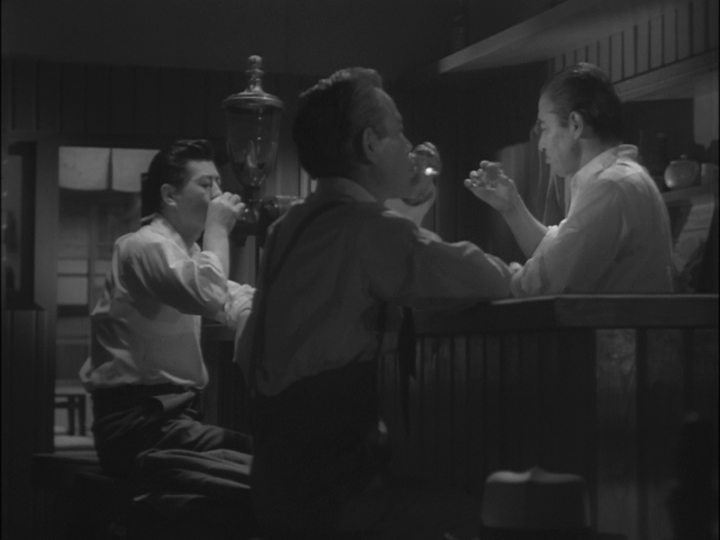
Early Spring comes together beautifully in its final half hour. A work transfer, an embittered wife, and a disappointed mistress leave Sugi completely alone in his world. When Sugi heads to a bar run by a good friend of his mentor, Ozu throws the crisis into stark relief by sitting Sugi next to an older man nearing retirement. As Sugi listens to the patron and the bartender talk about the unrewarding aspects of working life and their uncertain future, Sugi seems more downtrodden than ever. This is no more clear than when the bartender pours all three of them a drink. Sugi and the patron drink theirs in unison. Will Sugi become even more demoralized if he stays on his current path?

So he tries to change. For the remainder of the film, Sugi shows himself to be humbled and focused on getting his life together. He tracks down his wife (who has left him), but she won’t even see him. His emotional goodbye with Goldfish at a going-away party is wonderfully simple. A conversation with his mentor—played by the always excellent Chishû Ryû—makes clear what’s most important. And a surprising reunion with his wife won’t leave a dry eye in the house.

Ozu’s gentle handling of difficult material reveals a humanist sensibility that invites rather than repels. Even as characters engage in despicable behavior, there always seems to be in Ozu’s presentation an underlying charity toward those characters, a willingness to see them for who they are, and a hope that maybe, just maybe, change is possible.

Tuesday, After Christmas (2010)

Marriage stands as one of the most beautiful, and most ancient of all human institutions—unchanged in recorded human history. As such, it has presented one of the most tantalizing themes for filmmakers, many of whom have attempted to look at the institution in its most tragic incarnation, portraying the breakdown of a marriage. Most of these films do so with a heavy dose of tearful argument, attempts to patch it back up, cold silences, and the eventual climactic split.  These types of marriage-themed films falter by tipping the scale too far on the pain and anguish side of things, leaving viewers emotionally drained and, worse, pushed into an emotional reaction through overly manipulative scenarios and overwritten scripts.

Radu Muntean’s achingly restrained film, Tuesday, After Christmas, avoids these pitfalls. In so doing, it illustrates the beauty of marriage by inviting the audience to feel real loss when a marriage fails. Using lengthy shots filled with subtext, the film builds tension as the philandering husband nears, and eventually makes, his fateful decision. The early scenes alternate between pleasant, even mundane moments involving Paul and the two women he loves: his wife of ten years, Adriana, and his girlfriend of a few months, Raluca. And yet, as the film progresses, moments of tension begin to invade those scenes, usually through a spare line of dialogue or some tension left unstated.

The climactic scenes are an 11+ minute shot chronicling the aftermath of Paul’s choice, along with a wonderfully complex, expertly-acted, and heartbreaking final sequence. Muntean’s observant camera offers a quality most “marriage breakdown” films miss: a keen sense of the non-verbal connection between the married couple. As this couple moves and lives in unison—the lighting of a cigarette, the predictive understanding of one another’s movements—the film shows us through the non-verbal actions of the actors a harmonious union being infiltrated with cacophonous notes. And this is the real tragedy of the failed marriage: one less opportunity for unity and harmony among people in a desperate search for it.

The Sun Shines Bright (1953)

John Ford is generally known for his westerns starring John Wayne, the larger than life hero set against the backdrop of Monument Valley. However, Ford made a wide variety of films, some large and others small. And it was of these latter pictures that Ford once said, “My most beautiful pictures are not westerns; they are little stories without big stars about communities of very simple people.”[1] One of those “little stories” is The Sun Shines Bright, a film Ford made in 1953. Based on a series of stories by Irwin S. Cobb, the film follows a judge named William Priest and the many stories taking place in and around his town of Fairfield, Kentucky around the turn of the twentieth century.

The town, ironically named Fairfield, contains its share of racial injustice, long-term feuds, militant temperance unions, prostitution, and deep-seated family strife. The Judge—with something of a secret alcohol habit himself—stands as a sort of quiet, albeit active, witness to these troubles which in certain cases threaten the lives of innocent people.

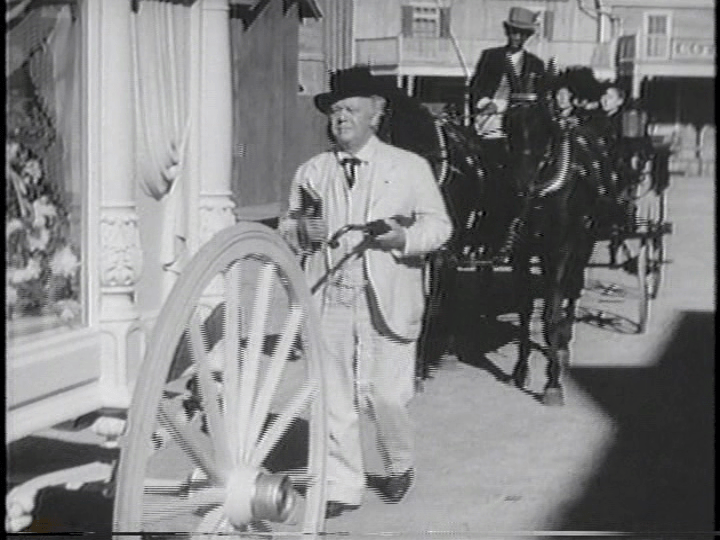
The many threads of disunity and disagreeableness come to a head on Election Day. Judge Priest’s rival, Maydew, campaigns for the judge’s office, speechifying on progress and the beginning of a new age. The speech ends, however, when a white, horse-drawn hearse rounds the corner onto the main street of town. In its wake, we see Judge Priest, walking alone, in turn followed by a carriage full of prostitutes, appropriately wearing all black. The crowd around Maydew looks on with a curious, haughty gaze, one that is repeated often—both silently and through laughter—as the procession moves through town. The dead woman, long-since banished from her family for her loose ways, returned home already ill and begged for a proper funeral just before she died. The only ones to even hear, much less heed, her request were the outcasts of society: a group of prostitutes, a mortician, a black carriage driver, and, oddly enough, the popular judge.

Ford films the funeral procession for more than seven minutes. The rest of the film moves along at a brisk pace, with cuts coming quickly on top of one another. However, the duration of the shots lengthen considerably during this sequence, Ford indicating formally the importance of slowing down and taking in the events of this procession. As the group moves through the town, Ford cuts across the axis twice, making it seem as if the procession were criss-crossing all over town, up this street and down the next, everyone a witness, everyone accountable. Slowly, as the group winds its way toward its destination, one or two individuals here and there join the march—some the judge’s friends, others outsiders not in with the “respectable” townspeople. Ford films all of this nearly without words, placing the emphasis on the visual movement through the town, the judge keeping a stoic look throughout the march while the crowd becomes something of an arrow being shot through town. The people in the procession understand the significance of joining this march—by doing so they are aligning themselves with the “sinners,” recognizing their own culpability in making this town an unjust place to live.

The funeral procession eventually enters a poorer part of town, where the blacks live separately from the whites. And then it becomes clear—the funeral will take place in the black church, because the respectable white church won’t have them. An all-black choir greets the group with hymns outside their small church building, and the mourners file in to a plain room. Ford scholar Tag Gallagher describes it well, noting that the “casket and mourners funnel away from us and upward into the chapel. This, and the fact that inside the chapel is stony and cavelike, is appropriate for the goal of the symbolic journey. The blacks stand outside, not by custom of segregation, but because this is a ceremony of white penance. Priest’s sermon will transform public confession through absolution into redemption.”[2]Before the sermon is even preached, before the Word comes directly into the scene, we have before our eyes a visual presentation of the public’s admission of guilt, their desire to turn from their sins, and their entrance into the cave from which new life will come to the town. In the simplest of sequences, Ford masterfully uses the tools of the medium to illustrate the drama of redemption. It should come as no surprise, then, that in the last sequence of the film, another parade—this time in front of Priest’s home—a group walks by holding a sign—“He saved us from ourselves.”


[1] Bertrand Tavernier, “John Ford à Paris,” Positif 82 (March 1967), 17.

[2] Tag Gallagher, John Ford: The Man and His Films (Berkley: University of California Press, 1986), 296.