The Royal Tenenbaums (2001)

When Royal Tenenbaum mentions visiting his dead mother’s grave with his kids, Margot, his adopted daughter, reminds him that she was never invited to go as a child. His response is priceless for its aloofness and insensitivity: he claims he was never quite sure she wanted to go, since the old woman wasn’t really her grandmother. Writer and director Wes Anderson gives his titular character quite a number of such “thick” moments. At first glance, they seem outrageous. But once we peel back the fantastical elements of Anderson’s cinematic style, we find such moments grounded in the truthfulness of lived experience.Anderson’s third feature, The Royal Tenenbaums offers a spot on portrayal of familial dysfunction, viewed through the lens of a comic fairy tale world where everything seems slightly skewed from reality. When Royal hears that his wife of many years has received a marriage proposal, he determines to recapture his place in the family. Yet when he arrives, he’s surprised to be met by children who are essentially unchanged from their adolescent selves. They’ve simply not been able to move on and grow up, a result of the damage caused in the wake of Royal’s leaving two decades earlier.The way the rest of the film interacts with images of death, suffering, and loss drives home the pain resulting from broken homes. This pain doesn’t subside simply because people go on with their lives as they had before the split. Rather, a fundamental change of direction is needed for this family, and it only comes after Royal is found out for faking a terminal illness, exposed for the liar he is. At that moment he realizes the change must begin with him, the failed patriarch.

Three scenes at the family plot illustrate the progression of the Tenenbaums. Early in the film, Royal and the kids visit his mother’s grave. Rather than it being a bonding time, it serves only to illustrate the anger of Chas, the alienation of Margot, and the misdirection of Richie. True to form, Royal remains completely oblivious to the causes of their feelings, acting instead as if he is the one being wronged by their insensitivity.

Much later in the film, after Royal has been booted from the Tenenbaum home, he visits the grave alone. He has been officially removed from the family. They’ve all rejected him, even Richie the peacemaker. But the seeds of change were planted in that rejection, so this time, he uses the opportunity at the graveside to reflect on his separation from the family. What should he do for them? He decides to give his wife Ethel a long overdue divorce, paving the way for her to proceed with her wedding to Henry.

The final time at the cemetery comes after Ethel and Henry’s wedding. In the aftermath of the wedding, Anderson employs a fantastic two and a half minute tracking shot that effectively brings together the once-fragmented family. The unity between form and content plays out beautifully here, and after a couple of subsequent scenes, we find out Royal has died.

Anderson once again brings us back to the cemetery. This time though, as the entire family gathers to pay their last respects, it’s clear they’ve been changed in their opinion of Royal Tenenbaum. His death engenders fond memories, rooted in the change of direction he made. He saw the destruction caused by his selfish actions and purposed to offer something positive in its place.

The cemetery, once only a place of death and alienation, takes on a new character at the film’s conclusion. Without necessarily leaving those negative or neutral things behind, it also becomes a place where family and friends gather to think about a life well lived. Of course, that’s only the case when the people buried in cemeteries decide to live this life in a way worthy of such an honor.

Monsieur Verdoux (1947)

Chaplin’s first true “talkie” in both sound and style, Monsieur Verdoux also marks the first time he officially abandons the Little Tramp character he made famous. Yet “abandons” may not be quite the right word, for Chaplin himself embodies the Tramp, even as this new character of Verdoux leaves those old outward cues behind.Monsieur Verdoux takes Chaplin as actor to an unfamiliar role, that of a murderous bigamist, a mantle his Depression-era character takes on after losing his job of thirty years as a bank clerk. Henri Verdoux visits his wife and child regularly, but not often enough for them, as they complain about his always being away on business. Of course, his business is of a most unseemly and time consuming nature: he marries rich widows, fleeces them for their money, and then kills them.

The film represents a development away from the unbridled optimism of Chaplin’s old screen persona, all the while retaining (though sublimating) the same boisterous charm and playfulness of that former character. This leaves the distinct impression of both continuity and discontinuity with Chaplin’s previous work. Echoes of the earlier films are apparent, notably when the Tramp’s coy, playful smile makes an appearance in a rowboat with one of his wives.

Such continuity is evident from the first few lines of narration as the film opens. Verdoux offers a brief history of himself, finally commenting that to do what he does, one must fundamentally be an optimist. In other words, he has bought into the prevailing mindset of the modern world: the belief in undying progress and the advancement of mankind. Even at this early stage of the film, it’s clear Verdoux sees himself as an extension of the modern age.

Yet in that opening scene, with narration peppered with optimism and hope, the “new Charlie” makes his first appearance, albeit at this moment, only as director. While his words are punctuated with optimism, the image before us is one of a graveyard. We even see Verdoux’ gravestone. We know he speaks to us as a dead man, much like William Holden’s young writer will do three years later in Billy Wilder’s Sunset Blvd. Like Wilder’s critique of the Hollywood machine, Chaplin uses this imagery to undercut the optimism of the modern age in the first few frames of the film.

The sense of discontinuity only grows throughout the film, as more and more of this character becomes clear. It’s still Charlie, but he’s changed. That paradox is beautifully contained in the stunning final image, one of Verdoux walking away from the camera, in handcuffs, on the way to execution. For anyone familiar with his work, that scene evokes the final image of Modern Times, where the Tramp and the Gamin walk away, arm in arm, into the sunset. The latter image is filled with hope and determination as they head off toward their destiny. In Verdoux, destiny surely lies ahead, but this time it is one of death and destruction.

Despite the wonders of his earlier work (City Lights and Modern Times are brilliant) the discontinuity present in Verdoux takes the film to a new level. Not only does it breathe new life into Chaplin’s onscreen persona, but it traverses new ground by examining the dark underbelly of a Depression-era, Capitalist, and warmongering society. Verdoux makes it clear that such things matter, not just on the stage of world diplomacy and economics, but in deeply personal ways as well. These commitments change the structure of society, thereby affecting its people. On the one hand, they bring a surface level optimism and hope for the future – people are thinking about what can be accomplished. But on the other, such commitments work against that hope in the dark corners of our cities and people. In light of this, one wonders with Verdoux what good it is to gain the whole world, if we lose ourselves in the process.

Big Animal (2000)

Some of my favorite films portray characters that step to a different tune. Kurosawa’s Ikiru offers Takashi Shimura’s Watanabe, who takes it upon himself to cut through bureaucratic red tape and get a playground built in a poor neighborhood. In The Third Man, Welles’ Harry Lime pursues his capitalist ideals with less than pure motives. The titular character in Lawrence of Arabia walks across a desert sans guide to follow his complicated desires. It’s no wonder then that I enjoy Jerzy Stuhr’s gorgeously photographed Big Animal, which in its own way, presents a similar scenario.

The film features the always interesting Stuhr in the lead role as Mr. Sawicki, a middle-aged village banker who discovers a camel in his front yard. While he takes to the animal quickly, his wife remains cautious, and the other townspeople offer a variety of responses ranging from full acceptance to outright dismissal. Slowly, Sawicki begins to see the consequences of his individuality, and must navigate his way through the competing desires of the townspeople.

Lest this sound like dreary Polish melodrama, it most certainly is not. The film bubbles over with life, quirkiness, and outright laughter. Yet this light-hearted manner never dominates the film, as comedy and drama intertwine to provide opportunities for complex sets of responses at any particular moment. In one scene, after Sawicki knows many in the town are against his owning a camel, he arrives home from walking the camel, only to meet an “angry” mob of his neighbors. It’s raining so he hurries into his new stable, while the (remember, angry) mob stands silently in the street. Stuhr plays the scene out beautifully, creating a moment where laughing or heartbreak would make for an appropriate response (FWIW, I laughed. A lot.).

This mix of emotional responses parallels another paradoxical element: that of the individual versus the community. Sawicki comes across near the beginning of the film as a man in tune with the world around him. He plays clarinet in the orchestra. He never arrives late for work. He shares predictably quiet dinners with his wife. Yet when the camel comes on the scene, everything changes. He takes his camel for walks through the town. He decides to build an Arabian style stable in his yard. And most of all, the townspeople begin to raise eyebrows at his “strange” behavior, leaving him feeling like an outsider in his own village. What’s a man to do?

Stuhr films Kieslowski’s script in black and white, and while the circumstances of the characters are anything but, this choice evokes a bygone era, much like George Clooney’s recent directorial effort, Good Night and Good Luck. By pointing us to the past, the film’s political allegory is apparent, though due to deft writing and direction, in addition to the engaging lead performances, the allegory never overwhelms the touching personal story that drives the film. This central narrative arc of a mature couple trying to navigate between conformity and being themselves presents a dilemma many of us can relate to in this day and age.

Children of Men (2006)

Rarely do I attend a film that at its conclusion, I have a deeply visceral reaction to, either positive or negative. An example of the former is In America, which simply ripped me to shreds on a first viewing. An example of the latter is Frequency, which has a final scene that made me want to throw something at the screen. Several years on, I continue to admire In America for its charms though the emotional reaction has subsided on subsequent viewings. I also continue to dislike Frequency, and while I have no plans to rewatch it, I suspect my strong feelings of revulsion would be tempered somewhat with a second viewing, though I cannot imagine ever actually enjoying the film. All of this should be read as a caveat of sorts to my thoughts on Children of Men. In other words, while my reaction to the film was quite strong, I expect that the negative emotions will fade over time, leaving behind a general dissatisfaction with the film. My interest here then lies in exploring why it is I reacted so strongly against Cuarón’s film (a film which has received nearly universal critical acclaim). Suffice it to say that when I walked out of the movie, I found my frustration growing to a point I rarely experience. What is it that’s driving this reaction?

Briefly, CoM takes place in and around London in the year 2027. While the world has changed pretty much for the worse across the board, the most significant change is that people all over the world are infertile for some unknown reason, a fact which apparently leads to greater unrest, accumulation of filth, and a general malaise across the world’s population. Our entrance into this world is through Theo (Clive Owen), a middle-aged, former activist who ends up doing the bidding of an extremist radical group by escorting a mysteriously pregnant woman to a safe house off the coast of England.

Considering CoM in light of content and form leads to a productive distinction for me to begin thinking about my response to the film. Following this line of thought, it seems I am left with one of two options to find a source for my harsh negative reaction: Either my read on the story or plot (content) yields something worthy of frustration, and/or something about the technical elements or presentation of that content (form) is trumping any charms the story might contain.

In terms of content, it seems that a number of positive responses come from the hope that is offered by the birth of a child in the midst of a dark world. While I can appreciate and resonate with this idea (which btw, is available by simply knowing the premise of the film), I am struggling to see how CoM gives us any broader context to which that hope can be connected. We might feel good about Kee and the birth of her baby, but what effect does that have on anyone else? The soldiers can’t even seem to stop fighting long enough to get her out of harm’s way. We also have no reason to believe such a thing will be duplicated. So while I can see the presence of hope there in a more surface way, when buttressed by the death and darkness and destruction in the world, the film as a whole doesn’t appear to offer a hope with much substance or connection to its world. It really doesn’t appear to be any kind of reality-altering hope that changes everything. That, to me, is the significant failure of the story – an interesting premise that really isn’t developed to any significant degree or connected to the world in which it is placed.

With a straightforward story that doesn’t offer much in the way of development, I turn to formal issues in hopes of some answer that will account for my reaction against this film. Eminent critics like Manohla Dargis in the New York Times and Jonathan Rosenbaum of the Chicago Reader have been explicit in their praise for the film precisely for its formal expertise. Yet as I continue to reflect on the experience, it seems to me that while technically impressive, those same formal elements offer a particularly dark and destructive picture of humanity, something that becomes clear to me in thinking about one of those hyped, centerpiece sequences in the film. After the first rather pedestrian twenty or thirty minutes, there is a shooting in which we watch someone literally bleed to death. The violence and force with which the actual shooting was portrayed is impressive in its shocking brutality. Yet after being in constant motion during this technically astute sequence, the director feels the need to slow down and settle the camera’s gaze on this individual taking their final breath, as the blood pours from the wound.

Within five minutes of this scene, there are two more shootings, again, shocking in their swift brutality. And again, the director feels the need, having already cut away to show the escaping perpetrators, to cut back to the dead/dying men on the ground, blood pouring into the street where they lay. After an extended sequence that appears to offer no cuts (apparently there actually were cuts, but digitally manipulated to appear otherwise), it is interesting as a point of emphasis to see that one of the first cuts Cuarón makes is in an effort to take us back to those dying men, bleeding on the street. One such shooting was more than enough for me to get the point of the horrors of the world they’re in, particularly since that first character was one we’d started to know and appreciate. Yet two more on top of it, shot in a very similar way, within moments of the first, and in both cases feeling the need to linger seems more than is necessary. It felt like Cuarón was piling on at that point.

It is at this point that the film starts to take on primarily the mantle of endurance test rather than meaningful exploration of relevant issues. Our view is constantly pointed toward those destructive, dirty, or even insane forces in the world. It is that destruction and dirt which is foregrounded throughout, rather than the development of the central theme. Thus, the violence occurs, but what meaning does it offer? Do the repeated acts, the lingering on dead/dying bodies contribute in a meaningful way to the development of the film’s themes? Are those acts contextualized within the broader fabric of the film? The first shooting I understand (even if I don’t like the way it was shot). The others after it all seem superfluous.

As a point of comparison, I offer Haneke’s Time of the Wolf (or even Caché), which, while I don’t love either film, I admire quite a bit. Like CoM, they also contain single, brief, brutal, and shocking acts of violence, but those moments of brutality don’t trouble me the same way they do in CoM. I am forced to ask myself why that is. Certainly Haneke’s violence is upsetting, but Cuarón seems to stretch far beyond that. Maybe it is the way the camera lingers on death and suffering in CoM, whereas Haneke’s films trust that the audience will continue to be troubled simply by the shocking brutality of the initial act itself. Maybe it’s because Haneke refuses to pile on those images, preferring a “less is more” approach. Maybe it’s because Haneke offers us a more complex vision of reality, one that better holds the tension between guilt and innocence, peace and suffering, all in view of such terrifying violence. CoM gives us an interesting premise of hope in a dark world, but I’m struggling to see where that premise is developed, and am even questioning if it delivers on that simple statement.

I’m still exploring the reasons for my negative reaction to this film. It sounds like the far majority of people had really positive and powerful reactions to it. That’s fine. But at this point, to bring us back to the content and form distinction, I’m left with a story that doesn’t offer much development of its initial premise, and a way of presenting that story which bludgeons the viewer with violent acts against mostly nameless, faceless people we neither know nor care about. This repetition of violent death and destruction (and especially the way those acts are repeated and emphasized visually) remains at such a distance from the central, undeveloped premise, that any mitigation the “hope in a dark world” might offer is muted to the point of virtual irrelevance.

2006 Favorites (Older Films)

It’s time for that end of the year wrap-up, which for me, usually comes at some point in late January. So getting it done now, has me right on schedule, if not a little early. I’ve always skewed late (i.e. not December 31) on this, largely because there were always a few extra films I wanted to see whose release dates were crammed into the last week of December. Now that I’m a parent and theater time is even more limited, I skew late because there are a few extra films I want to see that are already out on DVD.

Having said that, I suspect any future write-ups of the year gone by are going to tilt even more to the personal side as the far majority of my viewing tends to be of older films. I simply have less opportunities (and interest) in the heavily marketed “event movies” or even much of the Oscar bait thrown out at the end of the year. I find as I grow older I am less interested in “discovering” some new film and more apt to read weekly reviews, festival summaries, and write ups like these at the end of the year for ideas on how to fill out my viewing list.

In that spirit, this year’s list will be the older films I’ve encountered for the first time, accompanied by a list of new films that came out in 2006. The former is much more difficult in that it includes a much longer starting list. The latter is difficult in being able to find 10 films worthy of listing. As always, my rankings are based on what I most want to see again, and I’ve avoided an unranked list mostly because I enjoy seeing where things end up in relation to one another.

1. Brief Encounter (1945, dir. David Lean)

Yeah, I know. I’m kind of surprised too. But it’s a romance about an adulterous couple, you say? Well yes, but this film had such a powerful effect on me that its place on this list is without much question. When I think back to it, the first thing that always comes to mind is the completely disarming performance by Celia Johnson as the compromised wife. There’s a fragile beauty in her eyes that leaves her at once attractive, helpless, and guilt-ridden. Yet, even as she delves further into her adulterous fantasy, one continues to find hope in her guilt, leading to a stunning conclusion that, frankly, left me gasping for breath. It sure doesn’t hurt a film’s chances either when the director liberally employs some of the most exquisite piano music ever scored – Rachmaninov’s 2d piano concerto.

2. The Man Who Planted Trees (1987, dir. Frédéric Back)

If I’m honest, this is really the only film in competition with Lean’s fine work. A short animated film, The Man Who Planted Trees is a simple fable told with such quiet grace and poetry that it almost sneaks up on you. I say almost, because in spite of its quiet way, it quickly becomes apparent this film offers a picture of a man we would all do well to emulate. The story is simple: it’s about a single man living in a desolate valley who spends his days planting seeds, and the progress of that valley over time. Beyond that, the animation itself contributes to the overall feel of the film, beginning with fewer colors, slowly expanding the palette as the scope of the film expands. There’s a lightness and airiness to the beautiful animation that offers a nice contrast to the ethical and spiritual weight offered in the story itself.

3. Trial of Joan of Arc (1962, dir. Robert Bresson)


This short (61 minutes) feature follows the famous saint in her final days. Bresson typically finds the transcendent through close observation of the physical and finite. The same is true here, as his close focus on Joan, and especially her hands and feet, offer insights into bondage and freedom, life and death, guilt and innocence. Further, while the explicit content of the trial was most often theological, Bresson is careful to highlight the political stakes that were often driving the theological conclusions.

4. Nights of Cabiria (1957, dir. Frederico Fellini)

The star of this film, Giulietta Masina, has been a revelation for me this year. So expressive, but with a hard edge, and yet can still bring out a sensitivity and fragility that is just about heartbreaking. I chose this over Fellini’s earlier La Strada first and foremost because of its pitch perfect ending, a final shot etched into my memory. Beyond that though, Cabiria, a prostitute in Rome who somehow does well enough to get by without often working, is at the edge of a transformative moment in her life. The way Fellini ties in the romantic, financial, and religious elements that bring her toward this moment is so effortless, but also filled with engaging commentary on these elements.

5. Camera Buff (1979, dir. Krzysztof Kieslowski)

Kieslowski’s fictional account of a corporate salesman’s turn toward filmmaking is remarkably personal, astute in its observations of obsession, the dynamics of married life, and the beauty of simple, realistic filmmaking. The always interesting Jerzy Stuhr plays Filip, a young husband and father of a newborn who, having bought an 8mm camera to film his young daughters life, begins to turn the camera on other subjects. As the gaze of the camera leaves his family, Filip’s eye follows, a fact abundantly clear to his wife, who is effectively silenced by all the praise Filip garners for his films made in and around his company. A fascinating look at the nature of the filmmaker, Camera Buff reveals where the truth lies in filmmaking.

6. The Man Who Shot Liberty Valance (1962, dir. John Ford)

Ford’s gritty, dirty, and dark film that portrays the end of the old West, or at least the West as it moves on toward accommodating a more settled stage of life. Jimmy Stewart plays Ransom Stoddard, an old Senator who has returned to his roots in Shinbone for the funeral of his friend Tom Doniphon (John Wayne). Most of the film occurs in flashback, as Stoddard tells of his early days there, back when the town was run by a common (and often bloody) code of justice rather than lawyers and judges. It is one part nostalgia, another part lament, while Ford’s direction, pacing, and framing offer a complex experience of loss and the clash between old and new.

7. My Life to Live (1962, dir. Jean-Luc Godard)

Godard’s film follows a young, urban woman through twelve scenes as she moves from aspiring actress to full-fledged prostitute. Maybe that sounds just plain depressing, but with Godard’s energetic direction and the wonderful Anna Karina as Nana it is never anything short of mesmerizing to watch. Nana’s liveliness, vivacity, and naïveté create a character that is endlessly watchable, both for the passion with which she lives her life, but also out of concern for her less than ideal choices. She is a human being in the fullest sense, a wonder to behold.

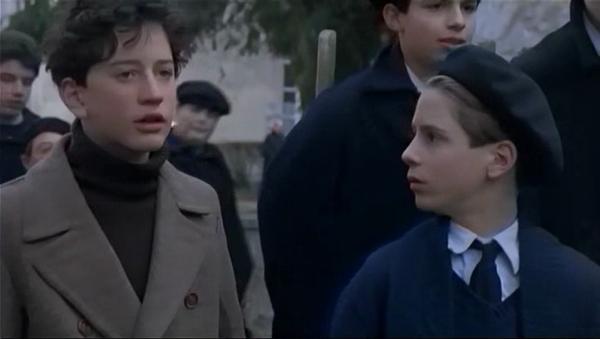
8. Au Revoir Les Enfants (1987, dir. Louis Malle)

A meditation on a childhood spent in war, Malle brings us into the world of an elite Catholic boarding school in the country, where Parisian parents have sent their children to wait out the German occupation of Paris. Julien, being smarter than the other boys and desperately homesick for his mother, is lonely and ends up becoming intrigued by the new boy, Jean, who just happens to be a Jewish refugee the priests are hiding, a secret to all the boys. Thus begins a journey of discovery for Julien, whose curiosity allows him to know Jean better than most, yet whose innocence keeps him from understanding the implications of Jean’s religious affiliation.

9. Best of Youth (2005, dir. Marco Tullio Giordana)


This is a six-hour miniseries made for Italian television that follows the development, suffering, and growth of a single contemporary Italian family – particularly two brothers who are close as young men but diverge in young adulthood and struggle to relate as they get older. In doing so, director Giordana deftly weaves in scenes depicting recent Italian history, making this a kind of historical document that adds a real groundedness to the proceedings. With its wide cast of characters, its mix of comic and dramatic elements, and an often lyrical presentation, it is always interesting to watch.

10. Badlands (1973, dir. Terrence Malick)

This is Malick’s first film, with a young Martin Sheen (Kit) and even younger Sissy Spacek (Holly) traveling across the South Dakota terrain. Malick’s trademark narration, elliptical editing, and visual poetry all make appearances in the finest form. While their young love begins with all the rapture of a honeymoon, things take a turn for the worse for the couple as Kit begins his murdering spree. Holly in her innocence tags along as they evade the police, yet the genius here is her narration, which creates an interesting dissonance between her thoughts and what we see before us.

Honorable Mentions (in alphabetical order): All About My Mother, Babe: Pig in the City, The Bad Sleep Well, Cache, Chungking Express, Elevator to the Gallows, The Fallen Idol, Grizzly Man, The Lady From Shanghai, Los Olvidados, Mr. Arkadian, Nashville, La Notte, Pickpocket, Raise the Red Lantern, Sherlock Jr., Shoot the Piano Player, A Short Film About Love, The Squid and the Whale, To Live, The Wages of Fear, Women on the Verge of a Nervous Breakdown, The World
2006 Favorites

I saw only 22 movies from 2006, so after the top 10 (listed below), there isn’t much in terms of honorable mentions. To that end, I would offer the latest installment of Michael Apted’s Up Series, 49 Up, as well as Spike Lee’s other film of 2006, Inside Man. There are also a significant number of films I have yet to see. They are (in alphabetical order): An Inconvenient Truth, Babel, Battle in Heaven, Be With Me, Cavite, Climates, Fast Food Nation, The Fountain, The Good German, Half Nelson, Iron Island, The Last King of Scotland, Lady in the Water, Little Children, Marie Antoinette, Miami Vice, Offside, Old Joy, Pan’s Labyrinth, Play, Requiem, The Road to Guantanamo, The Science of Sleep, Still Life, and Volver.

1. The Child (dir. Jean-Pierre and Luc Dardenne)

I saw this late on an April weeknight in a lonely art house theater. The paltry number of people in attendance (me) would give some indication of its box office success, but couldn’t be further from denoting the film’s power and grace. Sonia (Déborah François) has just given birth to her boyfriend Bruno’s (Jérémie Renier) son, and arrives home from the hospital alone, only to find Bruno has sublet her apartment for another couple of days. Temporarily homeless, Sonia tracks down Bruno only to eventually discover his irresponsibility is much greater than even she could imagine (the less you know about the plot, the better). The Dardenne’s trademark handheld style, close-ups, and powerful moral dilemmas are all on display here, used to their full effect. Only this time, they offer a final emotional punch in the gut to punctuate the tension they’ve built from the film’s earliest moments.

2. The Queen (dir. Stephen Frears)

I hate previews. That probably places me in a distinct minority, but there it is. Usually they are so obvious in their manipulation of the audience (often through the use of music and editing) that I am taken out of it almost immediately. Yet, when I saw the preview for The Queen back in October, a film I’d not previously heard about, I surprisingly found myself emotionally engaged from the beginning. That strong sense carried right into this film, and while I concede that the preview could have just found a clever way to pull my strings, I’d rather like to think that it is the persona of Queen Elizabeth herself, struggling in the days after Princess Diana’s death, that drew me into it. The Queen is a person who, unlike anyone else I can think of in the West, can be seen as a stand in for tradition and honor, two concepts sorely lacking in our developed, capitalist, upward and onward, win-at-all-costs society. So, as those values are violently called into question, the beauty of Frears’ film lies in the fact that he neither tips his hand toward tradition or modernization, or rather, he tips his hand to both.

3. The Death of Mr. Lazarescu (dir. Cristi Puiu)

Like L’Enfant, Puiu’s film relies on hand-held cameras, natural lighting, and a couple of understated performances that are more demanding than they appear. In particular, Ion Fiscuteanu as Lazarescu gives a beautifully physical performance, while Luminita Gheorghiu as the ambulance nurse offers a complex mix of apathy and compassion for her patient. Even though the title telescopes the ending, this movie is much more than watching a man die. Rather, it might fit nicely into the road movie genre, as the titular character, feeling ill, embarks on a journey (mostly via ambulance and stretcher) that takes him to his end. Along the way, he makes a variety of stops, receiving updates on how he’s doing, judgment for his failings, and in most cases, rejection of treatment. Neither the social critique nor the biblical and literary allusions are ever far from the surface, but they are woven into the fabric of the film, a film which echoes the cry of another frustrated soul: “If you had been here, my brother would not have died.”

4. When the Levees Broke (dir. Lee)

Spike Lee’s four-act documentary on the disaster surrounding Hurricane Katrina is simply a marvelous piece of filmmaking. He brings together such a wide variety of voices as he chronicles the events and personal stories from beginning to end. Thus, as the film begins with nervous trepidation in view of the approaching storm, we eventually move to disbelief, frustration, despair, and anger, all the while being reminded of the abiding (mostly Christian) faith of many of these people. Lee’s use of montage, alongside music from his regular composer (and New Orleans native) Terence Blanchard, is especially strong here in its ability to evoke mood and a sense of place (and eerily reminiscent of his work in his post-9/11 film 25th Hour). Lee’s images remind us at once of the terrible destruction that remains in the city and of the spirited people that continue to populate and rebuild it.

5. Three Times (dir. Hou Hsiao-hsien)

I had the pleasure of seeing the single screening of this film in my area, at the Asian Film Festival of Dallas, where it played to a full house. The organizers deserve credit for bringing such an important film to Texas. Hou’s latest offers three separate stories, taking place in different places and time periods, yet all of which star the same two principle actors. The first is played as a straight up teen romance from the ‘60’s, with pop songs, chewing gum, and clouds of thick smoke to set the atmosphere. The second installment finds our couple in 1911, she a working girl in an uppity brothel, he a customer with connections. Here, while the warmth of the first segment bleeds over into the second, it’s quickly quenched as the social and political realities become apparent. Finally, the last installment, which takes place in the modern day, finds our couple looking older than ever, beaten down with the pain, suffering, and apathy that life in the modern world has brought them. Where the ‘60’s offered unbridled innocence and the early twentieth century had social structure to offer some stability in spite its constraints, Three Times offers a much bleaker picture of contemporary youth.

6. Army of Shadows (dir. Jean-Pierre Melville)


Some might think this is cheating, but seeing as I saw this in a theater as part of a regular release, I am including it. I’ve found in the six months since then that this film has only grown in my estimation. Technically one might call this a war film, but instead of artillery fire and piles of rubble, the battles are largely interior, with the greatest damage done to people’s hearts and minds. Director Melville follows several members of the French resistance both in their attempts to thwart their German occupiers in WWII and to survive the constant threat of capture and death. While we see little of their actual encounters with the Germans, the tension over these people’s fates never subsides. Lino Ventura’s turn as the resistance chief is especially notable here, as it’s filled with the kind of quiet forcefulness we’ve seen more recently from Olivier Gourmet in Le Fils.

7. A Scanner Darkly (dir. Richard Linklater)

Richard Linklater’s first film of 2006 made use of the rotoscoping technique from 2001’s Waking Life to great effect in animating this film tracking the descent and delusions of substance abuse. As the film is narrated from the perspective of Bob Arctor (Keanu Reeves), it becomes clear that whatever success he’s had as a narc is being compromised by his dealing of and/or addiction to the new drug of choice, Substance D. Linklater’s animating over the top of the filmed image here works so well largely because it takes us a step away from reality, yet in doing so, brings us closer to the reality of drug abuse and the skewed perspective that results.

8. Forgiving Dr. Mengele (dir. Bob Hercules and Cheri Pugh)

There are quite a number of films that attempt to deal with, portray, and make judgments about the horrors of the Holocaust, yet few if any that I have seen offer anything as substantive as the frank portrayal of forgiveness on display here. As she’s judged and commented upon through any number of observers, Eva Mozes Kor presses on in her quest to offer forgiveness as her response to the horrors she and her sister endured at the hands of Mengele and his associates. With obstacles at seemingly every turn, Kor continues to bring remarkable energy, wit, occasional frustration, and grace to make clear to the world the power of forgiveness to heal old wounds.

9. A Prairie Home Companion (dir. Robert Altman)

A poignant film about death and the end of good things in this life that manages, in spite of its heavy subject, to remain light and airy and often quite funny throughout. This constant tension works well and helps to propel the film, which is absent of a strong narrative structure. As the camera, which is in constant motion, tracks both back- and on-stage activity during an airing of Garrison Keilor’s well-known live radio show, we are treated to a little of everything – comedy, mystery, slapstick, music, tall tales, and even a touch of the supernatural. It’s this latter element that gives the film a great deal of its weightiness, and offers, in light of Altman’s recent passing, a glimpse into the mind of a man nearing his end.

10. Buffalo Boy (dir. Minh Nguyen-Vo)

Set in Vietnam during French rule in the 1940’s, Nguyen-Vo’s first feature takes us into the lives of buffalo herders through the eyes of a teenage boy working for the survival of his family. During the rainy season when most of the grass is underwater, the herders take their neighbor’s buffalo (for a price, of course) to higher ground and wait for the water to recede. The images in this film are stunning, with regular wide shots of the horizon, which is constantly framed directly across the middle of the screen. This effect results both in a sense that with the water melting into the sky there will be no end to the flood, yet because of the strong horizon line, there’s also a balance to the shots, as if there’s an alternative to the water. This fits in nicely with the dual role the water plays for these people, both as a hindrance to their lives, but also as a life-giving source which brings fish and prepares the way to grow rice.

Shoot the Piano Player (1960)

Francois Truffaut’s 1960 comic-noir offering both defies and fulfills genre expectations. The contrasts are everywhere. Often funny, its tragic undertone is never far from the surface. Amorous escapades and freewheeling music buttress the tension felt as the thin plot rolls along. Irony inhabits a reference to peace sought by the US in John Wayne’s Torpedoes in Alaska. A married bar owner masks his continual pursuit of a young employee in painting himself as unlucky with women. Not only do these contrasts provide interesting and complex characters for Truffaut to investigate, but they also become the points at which we encounter meaning. It is in these contrasts that questions are raised about whom these characters really are, why they do what they do, and how they conceive of life.

The opening sequence offers several such moments. Immediately after the credit sequence, which features a static shot of the insides of a piano as Charlie presumably plays a little pop ditty repeated throughout the film, we see a man (whom we later learn is Charlie’s brother) running through the streets, being chased by a car. The sequence is edited briskly in stark contrast with the credit sequence, as Chico runs up and down streets, in and out of shadows. It ends abruptly when, out of breath and energy, he runs into a lamppost and falls to the ground. The opening static shot evokes a kind of playfulness (through the tune) in the midst of an overall stillness (through the piano). The motion is controlled, yet suggests a certain kind of beauty. The chase sequence, on the other hand, is deadly serious in its intensity, full of motion, and completely out of control. There’s anxiety to Chico’s life as he makes his break. Thus we find here a contrast between controlled reserve and wild desperation, one that arises within Charlie himself often through the film.

The chase scene is immediately followed and contrasted in a number of ways by a discussion between Chico and the stranger who helped him up. While the earlier scene was harried through its extensive use of cutting, this one employs a long tracking shot of the two men as they walk down the street. Now Chico has caught his breath, though the focus here is primarily on the stranger who speaks rather eloquently about his lengthy marriage (he’s on his way home with flowers for his wife). The stranger exudes stability, having fought through some initial doubts about his relationship. While we know little about Chico at this point, he responds favorably to this man’s conversation, at the very least respecting his commitment and showing warmth to this man who helped him up. There’s a sense in which this scene serves as a kind of third way between the first two, offering stability, rather than precise control or desperation. It also sits as an ideal to look back upon as Charlie’s story progresses (most notably as a companion to the flashback sequence with Charlie’s wife).

Once they part, Chico makes his way to his brother Charlie’s place of work. While Chico appears warm, albeit desperate and helpless, Charlie immediately strikes the viewer as cool and aloof towards his brother. Thus, while we, at least briefly, side with Chico, we also realize that as the titular character, Charlie at the very least requires our full attention. The impression of these two is quickly complicated by Chico’s carrying on in the bar while Charlie carries himself with a certain quiet confidence that results in him helping his brother to escape. Further, our intro to Chico is through his scared and tense facial expressions throughout the chase sequence, while our intro to Charlie is simply through his music, without getting to see him. This serves to heighten the contrast between them in this first meeting, where Chico initially appears to be the more likable of the two. It also causes us to be more removed from Charlie at the outset, allowing Truffaut to slowly build this character throughout the film.

Then there’s the contrast within Charlie’s character, which is central to the film. Who is this man? What drives him? What is he all about? Our very first moment with him has Chico calling him Edouard, and he demanding to be called Charlie (a point that is later explained by a flashback to his past). This inner contrast continues throughout the film, not only through his dual identities, but also through his action or lack thereof. In the first bar scene with his brother, he doesn’t want to get involved in Chico’s troubles, but then his assistance ends up being the sole reason his brother gets away. His timidity is apparent to everyone, yet he’s found to be rather aggressive in the bedroom.

All of these contrasts serve to set us off balance regarding the action and the characters, Edouard in particular. What will they do? What will happen next? Truffaut uses the device to keep us guessing throughout, never tipping his hand. And even in the film’s conclusion, another static shot, this time of Charlie rather than the piano (though the song is the same), we are left with more questions than answers. Has he retreated into his timidity, or does he sit at his piano waiting for another opportunity to engage and truly live life? This is the final contrasting question, one that makes us unsure about the future of this character. But more profoundly, one that calls us to the same question. We too, like Charlie, have experienced successes and tragedies, good and evil, hope and despair. In the end, we go back to the mundane of life and are faced with the daily decision to retreat or engage.

Red (1994)

The third film in Krzysztof Kieslowski’s Three Colors trilogy, Red portrays a movement from cynicism to hopeful innocence, from death to life, and ultimately, from isolation to connection. Yet this movement appears in a universe where it is difficult to determine the difference between fated events on the one hand, and the utter randomness of Lady Luck on the other. This ambiguity brings a freshness and vitality to the proceedings where lesser films are crushed as the gears of plot groan into motion.

Red introduces us to Valentine (Irene Jacob), currently living in Geneva apart from her busy and brusque boyfriend Michel. She’s a model who’s just agreed to a photo shoot for a bubble gum company, part of an ad campaign creatively titled “A Breath of Life.” One cannot help but appreciate the characteristic underplayed Kieslowskian humor here. One night while driving home, Valentine runs over a dog, Rita, and upon returning her to the address on the collar, meets with a rather unpleasant old man (a retired judge, played by Jean-Louis Trintignant) who tells her she can do what she wants with his severely injured pet. Valentine, befuddled and hurt by his insensitivity, fires back a penetrating question about whether his daughter would merit the same concern, and storms off to get the dog medical attention. The film follows both the developing relationship between Valentine and the judge, as well as a parallel story of sorts with a young law student and his girlfriend. There are three strange, and what might be considered throwaway moments that help to bring the film and its concerns into focus.

The first takes place early on, the day after Valentine’s initial meeting with the judge. She has since brought the dog home from the vet, and as is her habit every morning, she heads down to the corner store and plays a single coin in the slot machine. She’s prepared to lose, which as we see in an earlier scene, seems to indicate all is right with the world. Yet on this day, three cherries come up, many coins fall out, and Valentine is left nonplussed. After a moment’s reflection, she notes to the store keeper in a rather dour way that she’s pretty sure she knows why this happened (a reference to the incident the night before). Why so gloomy though? A scene like this flies in the face of common human experience. Most of us, when presented with large amounts of money, tend to be pleased rather than distressed.

By including this strange reaction, Kieslowski sets us up for the ambiguity between fate and freedom. Valentine’s reaction points out that all is not well in her world. Something is amiss, though even she can’t be completely sure of the exact cause yet. The slot machine victory seems like a fluke, but do we really know that? For Valentine, the corresponding event of hitting a dog also seems fairly random, yet what if it isn’t? What appear to be chance events in the lives of these characters are actually leading to greater things far beyond what they can imagine. Valentine seems to recognize this, even as she cringes at what the consequences might be.

The second strange moment comes not long after. Rita is healed, so Valentine decides to take her for a walk, letting her loose in the park. Rita immediately dashes off, while Valentine gives chase into a church where the Mass is being given. It’s a comic scene to be sure, as Valentine asks the priest at the altar if he’s seen her lost dog. Yet, is it wise to think of it as just that, or is something more going on? It seems such a strange moment, but I have too great a respect for Kieslowski to believe he just chose that location at random. Placing the scene in context, the dog ultimately leads Valentine back to the judge’s home, where they have the first of their three lengthy conversations. Thus, in the midst of this journey to solidify the central relationship of the film, Kieslowski has his heroine stop in a religious service. That he makes it a comic scene takes a little of the pretentiousness out of the moment, all the while leaving its significance. God’s presence is hinted at even in this simple transitional moment. All the while the main characters simply act and react as they normally would. For Valentine, that means following Rita until she makes sure the dog is safe. What we have here then is a recognition of transcendence in the midst of the common reactions of regular people. Yet while we have a hint here at who might be guiding or at least overseeing these events, one cannot help but wonder if the path leads anywhere in particular.

Finally, in a moment near the end of the film, Valentine invites the judge (now, safe to say, her friend) to a fashion show in which she’s modeling. He lingers afterward, hoping to speak with her, and as she walks out, still on stage, she sees him in the seats and moves in his direction. As they approach one another, she on stage, he in the seats, Kieslowski places his camera on her from an extremely high angle, causing her to tower above the judge in quite an extreme way. The moment is visually notable, allowing us to identify first with the judges lowliness and humility in her presence. Before he looked upon her with suspicion, anger, and pride, having no time to even answer the door or look at her when she left. Now though, he comes to her, waits for her long after the show ends, and places her on a pedestal. She has come to represent life, innocence, and community for him, things that have become realities in his life through her presence in it.

These three moments might be considered throwaways in a movie like this. They are certainly too brief to be considered on par with the first lengthy conversation between the judge and Valentine, a scene that crackles with tension and emotional power. Yet, the moments noted here are illustrative of Kieslowski’s work, in which no moment is random, no camera move left unconsidered. Yet somehow, even with such precision evident in his work, Kieslowski is also able to open us up to an unseen world that is far greater and more mysterious than a few words here can begin to comprehend.

Au Revoir les Enfants (1987)

Louis Malle’s Au Revoir les Enfants follows the fate of two boys, one Jewish (Bonnet) and one not (Julien), at a secluded Catholic private school for the children of the rich. Malle begins his film on a train platform in Paris as Julien, a boy of twelve, says a painful goodbye to his mother. The simple scene belies its complexity, as it exhibits an intricacy that is evidence of a master in command of his craft.It is in the middle of WWII, and the boy feels the pain of separation acutely. If he isn’t actually crying, we know he wants to. Still feeling the longing of a child, yet needing to act grown up beyond his years, the tension within bubbles to the surface as Julien lashes out at his mother. We know he doesn’t hate her, in spite of his words. Yet as children are wont to do, he offers an extreme emotional reaction in lieu of expressing his true feelings.

Early in this scene, Julien’s mother says hello to some children passing her to board the train. The subtle irony of this statement, both in light of the film’s title and the fact that these boys are leaving to go somewhere further illustrate the isolation of Julien from his mother. He wants nothing more than to stay at home with her, yet she is happily greeting other children while he gets ready to leave.

Julien’s isolation is seen also in the disconnect between he and his older brother/fellow students on the platform. His brother playfully makes fun of him in the midst of this difficult separation and illustrates his own independence from his mother by smoking in front of her. Julien also expresses disdain for his fellow students, no doubt feeling the sting of his upcoming separation.

The complexity of Julien’s character is further compounded for us as his mother, in a poor attempt at comfort, wishes that she could dress as a boy and be with her son all the time he is away at school. Julien is at a significant moment in his life – being forced away from his mother, yet still a child desiring her embrace. When his mother kisses him goodbye on the forehead, he boards the train with the red lip print still visible. He is so lost in his anguish that he cares not for appearances.

Thus, in a simple goodbye scene that takes place on a non-descript train platform and lasts not longer than two and a half minutes, Malle has essentially established the depth of his main character, the one through whom we will experience the events and people in the film. He’s isolated, frustrated, angry, and sad. The union Malle exhibits between economy and complexity marks the entire film – simple scenes filled with details that enrich characterization, evoke the time and place, and subtly walk us into the loss of childhood that Julien experiences.

The World (2004)

Jia Zhangke’s The World takes place in a theme park a few miles outside of Beijing that includes scale models of many famous world landmarks, thus offering the natives an opportunity to “travel” without the pricey airfare or time commitment. The film invites us into the lives of two of its employees, Tao and Taisheng, both of whom have come from their villages in rural China to make something of their lives, and are now dating one another. One of the central questions the film raises regards the wisdom of such a choice, as the protagonists are constantly isolated and frustrated in their urban world, usually communicating more through text messages than in person. Are they better off than they had been?

The film’s opening scene is brilliant in implicitly bringing forward the film’s central concerns. It is a continuous shot of Tao walking down a plain, painted brick hallway backstage before her performance in a flashy dance number for the park’s customers. She is dressed in elegant robes, bejeweled, with her hair beautifully braided under a veil. One’s immediate impression would be to suspect she is some kind of royalty were it not for her surroundings – the aforementioned hall, filled with pipes running over a hard cement floor. The contrast between setting and costume raises implicit questions about the reality of Tao’s situation that are connected to the idea of the park itself: What are the results of this fake finery and scenery, both for Tao, and more broadly, for the Chinese people who participate in this as employees and paying customers?

Jia tips his hand even in this early scene, because as Tao walks the hall, she calls out for a band-aid, over and over and over again (so many times in fact that I suspect I figure I’ve got this Mandarin phrase down pat). We cannot see her wound (nor do we ever, it remains off camera), but she calls out anyway, each time receiving blank stares or a curt “no” from other performers in their dressing rooms. No one seems to be able to help Tao with her problem. While she eventually pesters someone into getting her a band-aid, the stage is set: this woman has a problem, and its solution is terribly difficult to come by.

The director’s stroke of genius is that through a detailed focus on the lives of Tao and Taisheng, he implicitly broadens the examination of this question throughout his film through various encounters the two protagonists have. It comes to include not only other poor villagers who come to work in the city, but also those rich businessmen who are also being changed by the opening of China to the rest of the world. Jia’s wide, long shots contribute to this poignant and dark vision of a new world.